In an industrial market that continues to grow rapidly, Reeves Young Industrial empowers its clients by providing a fully integrated team of construction professionals with self-perform capabilities and the technical expertise to deliver projects quickly, safely, and with quality to meet ever-increasing market demand.
Pack the banner stand, load up the swag, queue up the playlist. It’s career fair season, and the Reeves Young team is hitting the road.
Starting September 1st, we’re kicking off a multi-state career fair tour that will take us to more than a dozen college campuses across the Southeast over the next two months. Think of it as a road show: same team, same story, sixteen different stops, and a new set of Bulldogs, Tigers, Wildcats, and Owls to meet at every one.
Where We’re Headed
Here’s the full lineup, mark your calendar for the one closest to you:
Event
School
Date
Auburn Meet + Greet
Auburn University
9/1/2026
Vanderbilt Career Fair
Vanderbilt University
9/9/2026
Florida Career Fair
University of Florida
9/10/2026
Clemson Career Fair
Clemson University
9/10/2026
GSU STEM Night
Georgia Southern
9/14/2026
Auburn Career Fair
Auburn University
9/15/2026
GSU Career Fair
Georgia Southern
9/15/2026
Georgia Tech Career Fair
Georgia Tech
9/16/2026
UGA Employer of the Day
University of Georgia
9/29/2026
KSU Career Fair
Kennesaw State
9/30/2026
MTSU Career Fair
Middle Tennessee State
9/30/2026
UTK Construction Science Career Fair
University of Tennessee Knoxville
10/1/2026
UGA Career Fair
University of Georgia
10/6/2026
WKU Career Fair
Western Kentucky University
10/14/2026
SRU Career Fair
Slippery Rock University
10/15/2026
Gwinnett Tech Career Fair
Gwinnett Tech
10/27/2026
Why We Do It Like This
Job boards don’t capture what construction actually feels like. So every fall, our recruiters and project team members pack up and go meet students in person, less “apply here,” more “come talk to us.”
What to Expect at Our Table
Real people who do the job, not recruiters reading from a script. Straight talk about our five business units (Heavy Civil, Commercial, Industrial, Water Resources, and support) so you can figure out where you’d fit. And honest conversations about both internships and full-time roles.
What You’re Actually Signing Up For
Real tasks and responsibility, not coffee runs. Competitive pay. Mentorship from people at the top of the company. A non-judgey environment for the “dumb questions.” A real shot at full-time employment after graduation. Plus fun events, real office culture, and a well-stocked snack pantry.
A Little Advice, From Us to You
Bring a real question, not just a resume. Tell us what you actually want, even if you’re not sure yet. And if we tell you to follow up, follow up. We mean it.
\
Built By Relationship, One Campus at a Time
Everything we do runs on “Built By Relationship,” recruiting included. So if you spot our banner this fall, stop by. We’d love to talk.
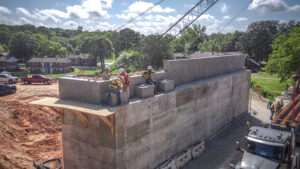
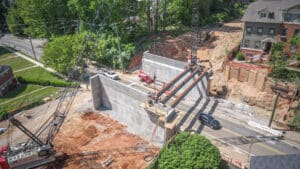
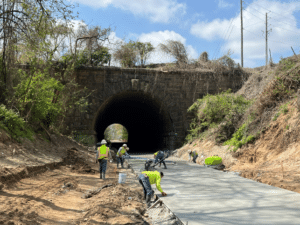
The completion of Segments 2 and 3 of the Atlanta Beltline’s Southside Trail marked a major milestone for both Reeves Young and the Beltline project itself.
This 1.2-mile stretch connected the Glenwood Park, Grant Park, Ormewood Park, and Boulevard Heights communities, extending from Glenwood Avenue to Boulevard Southeast.
Bryce McDonald, Heavy Civil Operations Manager at Reeves Young, described the challenge of delivering the multifaceted project ahead of a critical deadline: the start of the 2026 FIFA World Cup in Atlanta. Through the dedication and perseverance of the project team and its trade partners, Reeves Young successfully completed the project on schedule while exceeding expectations.
“The project would not have been completed had it not been for the acceleration efforts from Reeves Young and our trades,” McDonald said
McDonald explained that communication, collaboration, and strategic planning were key factors in meeting the accelerated schedule.
“We collaborated with the Beltline on ways to improve the schedule. Their main focus starting in late 2025 was to have this section of the Beltline completed by the start of the World Cup,” he said.
While the World Cup deadline added urgency to the project, McDonald emphasized that the long-term impact on the surrounding communities remained the team’s primary motivation.
“The main appeal for this section of the Beltline was that the neighboring communities would have access to 17 miles of continuous trail, essentially from their backyard,” he said.
The completed segment now provides accessible routes for residents, visitors, students, and families, connecting neighborhoods to job centers both north and south of I-20. Completing the project before the World Cup also helped prepare the area for the anticipated increase in visitors to the Atlanta area.
“Delivering this project before the FIFA World Cup was very important considering the increased activity and pedestrian and bike traffic,” McDonald said.
Brennan Small, Project Manager for Segments 2 and 3, explained that as the deadline grew closer, aligning efforts took on even greater importance.
“As we approached project completion, coordination became even more critical, with daily communication between the project team, subcontractors, and the owner to ensure final commissioning activities remained on schedule and any issues were addressed quickly,” Small said.
The team’s disciplined communication and commitment to execution allowed Reeves Young to meet the demanding schedule while maintaining its high standards for quality.
When asked what he was most proud of, Small pointed to the dedication of everyone involved in delivering the project.
“Achieving completion of the project on time required numerous long days, weekend work, and an unwavering commitment from everyone involved. I’m extremely proud of the dedication and teamwork demonstrated by both the Reeves Young project team and our subcontractors throughout the project,” he said.
Tito Ramirez’s story is a gleaming example of the tenacity and drive at Reeves Young.
Along with ADICAY, a nonprofit organization based in Guatemala, Tito supported an ongoing project to deliver clean water to the community of San Bartolomé Sacaj in Guatemala.
ADICAY is a Guatemalan non-governmental organization and engineering firm based in Cobán, Alta Verapaz, dedicated to improving the quality of life and infrastructure for remote Mayan communities.
Tito with the ADICAY team.
The village is a small community, made up of 64 families, who formerly did not have reliable access to water.
San Bartolomé Sacaj does not stand alone in the humanitarian crisis across Guatemala.
According to Human Rights Watch (2026), “widespread lack of access to safe drinking water and adequate sanitation puts the health and other rights of millions of Guatemalans, especially Indigenous people and women, at risk.”
Humanitarian efforts and volunteers are limited and underfunded in many of these villages, defining Tito’s efforts as all the more valuable to the community.
He explains how important the project would be for families in the village, “The gratitude expressed by the community was profoundly impactful. One woman shared that access to running water would allow children to attend school more consistently and enable men to pursue full-time employment instead of spending hours each day collecting water.”
This experience was not only transformative to the people of the village, but to Tito as well, “Hearing these stories first-hand created a deep sense of perspective and appreciation and it was clear how meaningful this project was to their daily lives. These moments left a lasting impression on me and are difficult to fully capture in words.”
A background in Water Resources was paramount to the execution and safety of this project.
Tito explains, “My background allowed me to better understand the system and coordinate effectively with the local superintendent. It also helped in promoting construction safety practices and identifying potential hazards, ensuring safer working conditions for everyone involved.”
The biggest takeaway from the project for Tito was the newfound appreciation of privileges we often take for granted, “The experience reinforced how fortunate we are to have readily available potable water and highlighted how critical our work in the water and wastewater industry is to communities.” He says, “It also brought greater awareness to the ongoing global challenges surrounding access to clean water.”
Together, Tito and his team were able to deliver a 70-cubic-meter storage tank and install multiple PVC pipelines.
The accessibility of clean water is a groundbreaking effort that will benefit the village for years to come.
Reeves Young is dedicated to showcasing the outstanding character of our employees, and the charitable ventures they take outside of our organization, and Tito’s story is no exception to this quality of greatness.
Entrepreneurs play a vital role in transforming our lives by disrupting markets and revolutionizing industries. We are thrilled that Eric Young, CEO of Reeves Young is to be recognized as a finalist for the Entrepreneur Of The Year® 2026 Southeast program. As the world’s most prestigious business award for entrepreneurs, the Entrepreneur Of The Year award has been at the forefront of identifying game-changing business leaders. The program has honored the inspirational leadership of such entrepreneurs as Sheila Mikhail of AskBio; Kendra Scott of Kendra Scott LLC; Allison and Stephen Ellsworth of Poppi, Jodi Berg of Vitamix and Eric Yuan of Zoom; We’re honored to have Eric Young recognized among so many other ambitious business leaders in the Southeast. Follow us along on our journey to the regional awards celebration on June 18!
Our team sat down with Industrial Operations Manager, Chris Smith, and Senior Safety Manager, Aaron Lease, to talk about what ‘Safety’ means at Reeves Young.
At Reeves Young, our commitment to safety is a journey of continuous improvement, and that dedication takes on even greater significance as we come to a close on Construction Safety Week 2026.
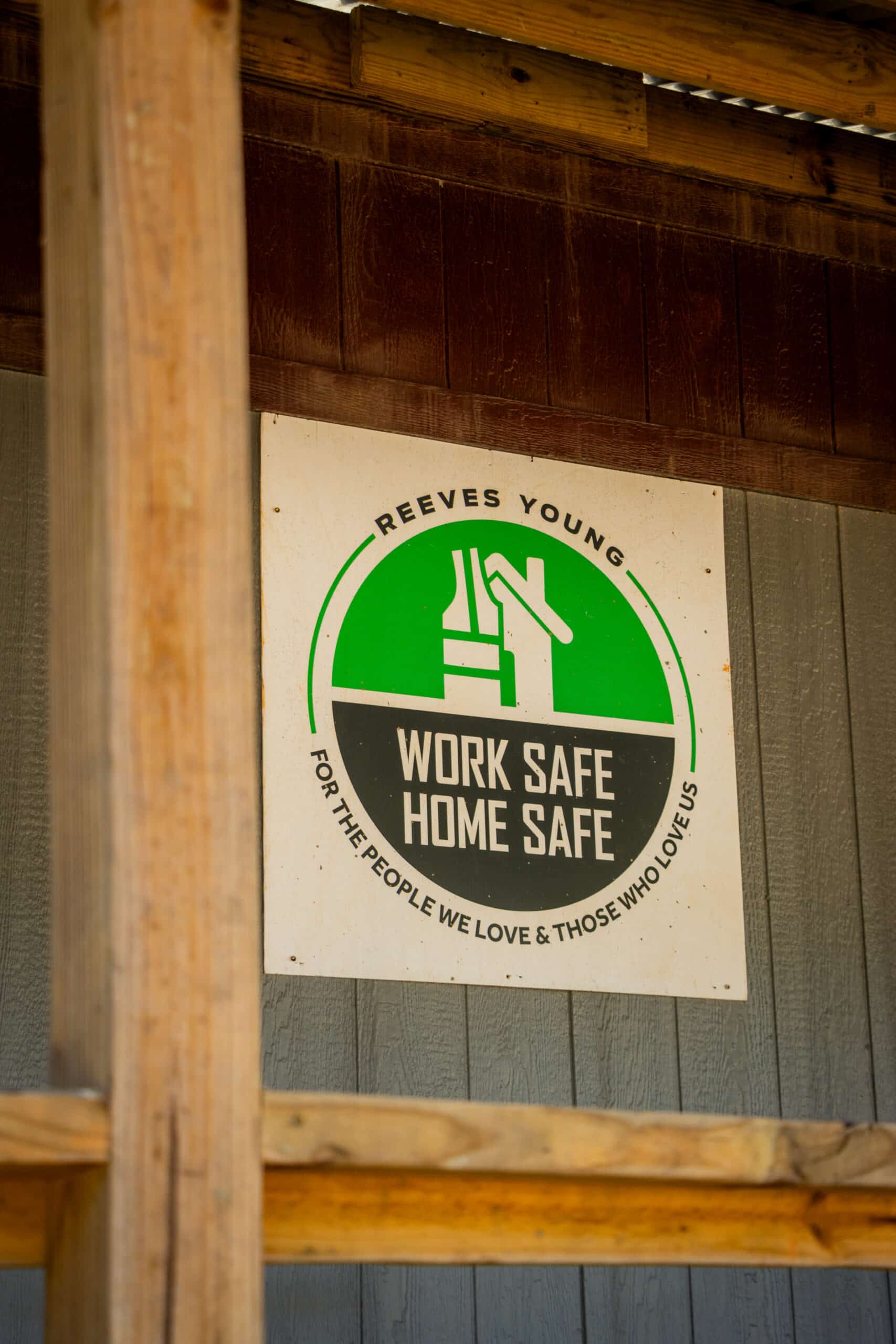
The theme for this year’s Safety Week, “All In Together,” perfectly aligns with our Safety culture of care, “Work Safe, Home Safe.” It serves as a reminder that staying safe requires a collective effort to Recognize, Respond, and Respect the hazards inherent in our industry. While we’ve put an emphasis on these topics as part of national campaign for safety, it isn’t just a trend for Reeves Young. Safety is our singular priority.
Our Safety culture, Work Safe, Home Safe message is simple: it’s for those we love and those who love us. It has been built to be a steadfast reminder to each employee and subcontractor that our number one goal is getting everyone home safely at the end of the day.
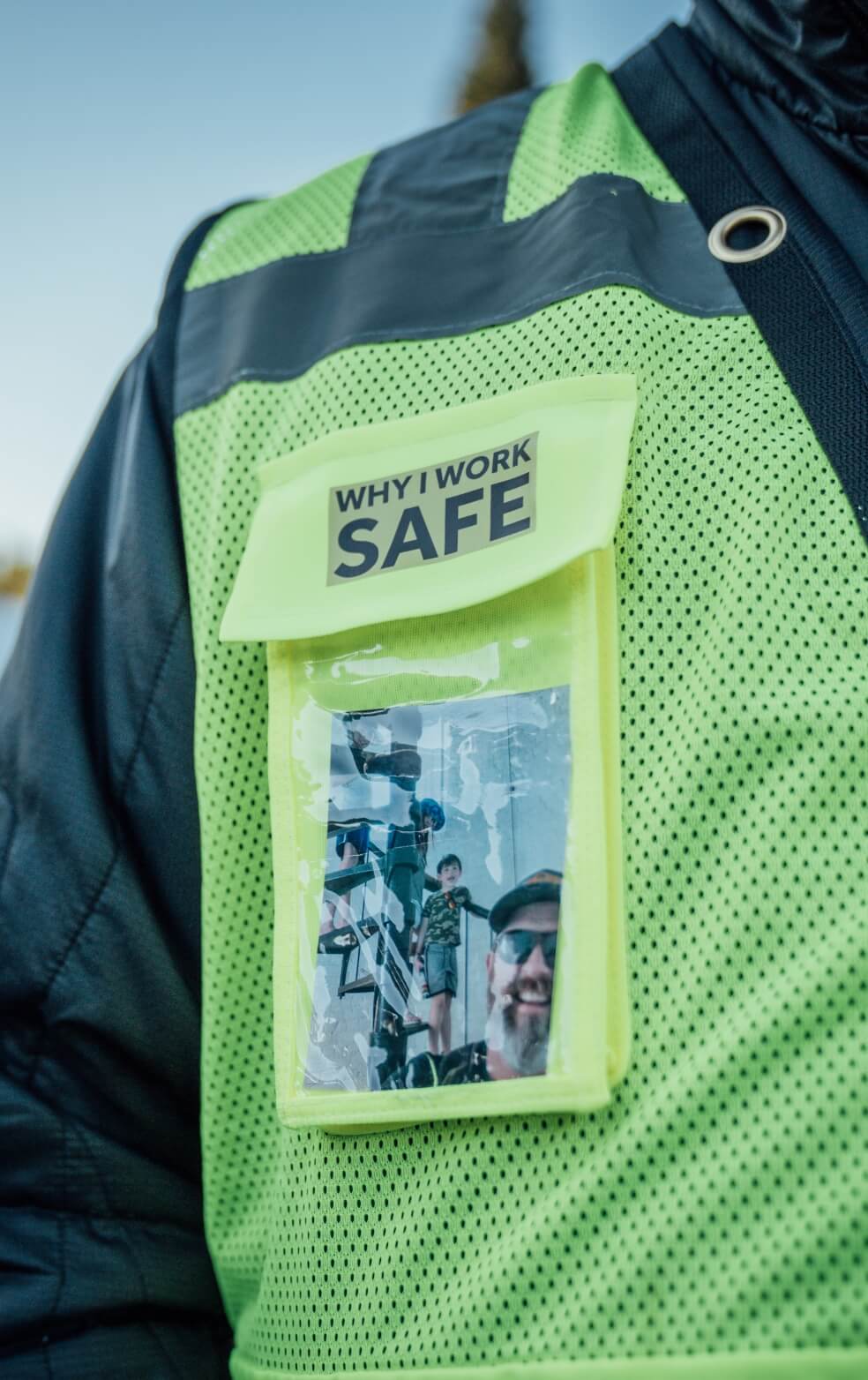
“Safety is compassion,” says Industrial Operations Manager, Chris Smith. “When I think about safety, I think about the families that could be forever affected if we don’t plan the safest way possible to complete our daily tasks.” Upon onboarding, each new employee prints a photo of their loved one(s) to place in their safety vest pocket, for everyone to see. This simple step has made giant leaps in recognizing Reeves Young’s safety culture both on the field and through management.
Senior Safety Manager, Aaron Lease, shares, “We carry a photo of our reason to Why I Work Safe as a reminder of the greater importance to why we are here each and every day. Why we put in the long hours, days and nights, phone calls, emails, and drive time is all because of that photo in our vest,” he comments. “For me, it’s my wife and 2 beautiful daughters. To someone else, it may be their pets, parents, grandparents, hobbies, etc.”
“Whatever your ‘Why’, we all carry that daily reminder for ourselves, as well as, a reminder for the men and women that we are working next to everyday – that we have something to go home to,” Lease continues.
Across more than 200 projects, tasks, timelines, and project-focused goals are always changing, but one thing that is constant is our spotlight on safety. One habit that every employee should adopt immediately is the ability to ‘think’ before you ‘do’. Slow down production and implement a plan. “Thinking requires a plan, and a plan drives a means to identify risk” Smith emphasizes. “Critical thinking must happen every day.”
“I have stopped work for safety many times, and for a wide variety of reasons,” Smith says. “We have empowered our team to know they have authority to shut down or send home people not following our standards. This happens regularly to ensure that messages are received. We care about people, those who work for Reeves Young and our valuable trade partners.”
Safety tent with protective gear and cooling down supplies at the annual Reeves Young Kickball Tournament
Safety expectations extend beyond Reeves Young employees; they apply to every person on every jobsite. Each day begins with a dedicated safety meeting, where teams align on the work ahead and clearly define expectations. As Smith notes, these conversations focus on specific safety topics and set a direct, intentional tone for the day.
Project leadership also emphasizes the importance of participation during morning huddles. “A safety meeting is only as good as the engagement that you get from the individuals that are a part of the meeting,” Lease explains.
He adds that the effectiveness of these meetings depends on how they’re led. When a Foreman or Superintendent outlines the day’s plan and potential risks without inviting input, the value of the discussion is limited. In contrast, “If you have a leader that is engaging his or her crew members, asking for questions, assigning responsibilities, encouraging crew members to use their voice in the planning of the day, you will often find that the meeting is much more productive.” That collaboration not only strengthens communication but also ensures everyone has a role in building a safer jobsite. Lease notes that when it comes to safety, failing to plan is planning to fail.
Mental health is just as critical as physical safety in the construction industry, yet it has historically been overlooked. The tides, however, are changing. As Smith shares, “The construction industry has come a long way in recognizing how important mental health is in our business. The biggest step was having the conversation about this, and we’re on a very good path, as we continue to talk about this daily now and check in with our teammates, so they know we care.”
At Reeves Young, that commitment is backed by action. The company provides dedicated mental health resources and encourages employees to fully utilize the benefits available to them – reinforcing that support is not only accessible but encouraged.
Lease echoes this progress, noting, “As an organization, I believe we are headed in the right direction in raising awareness to mental health and its impacts in the construction industry.” He also emphasizes that there is more ahead, “I am looking forward to what more we can do in this area,” with a continued focus on expanding efforts and strengthening support in this critical area of safety.
Safety at Reeves Young is always evolving and improving. From planning and communication to training and accountability, the foundation of the program remains rooted in people and purpose. Lease looks forward to building greater consistency in what Reeves Young is already doing well, while continuing to strengthen a culture where safety is first priority and second nature. That commitment is what drives the company forward. “Because at the end of the day, our people are most important,” Lease explains. “Planning, communicating, training, and continuing to build a culture of care and personal responsibility is what we will keep on doing.”
Smith echoes the sentiment, “As we have taken huge strides in what Reeves Young safety looks like, we have a long road ahead. We must continue to build our program.” At Reeves Young, everyone is a part of the Safety team. We continue to build awareness, commit to training, and encourage speaking up about safety.
By staying “All In Together,” we ensure that the most important part of any project – our people – always make it home safely. At the end of the day, that is the only goal that truly matters. Work Safe, Home Safe, All In Together.
Additional Construction Safety Week 2026 resources are available here.
The construction industry is imperative to the growth of the economy, to society, and to the community. From ensuring your water makes it to your faucet, making sure the bridges are structured to stand, paving new roads from NYC to LA, to building your new favorite restaurant, pickleball courts, or hotel, the construction industry is vital to our progression as a civilization.
In 2024, there were 1,032 fatalities in the construction industry, not including suicide as a cause of death1, and many of those deaths were preventable. Construction-related injuries happen frequently and can be significant and long-lasting, such as hearing loss, mobility problems, and respiratory issues2.
As we all can predict, the 2.1 trillion-dollar industry3 isn’t going anywhere–and we might be biased, but we don’t want it to. Construction employs 8 million people3 and provides various services that are integral to a continuously developing community.
Although these fatalities, time and time again, are preventable, without a clear focus on safety in construction, these deaths and injuries will continue to happen.
So, the question stands: how do we minimize risk, injuries, and fatalities, while maintaining construction, growth, and innovation?
The answer to this question is simple: a focus on safety.
There are many laws put in place by the U.S. Department of Labor (carried out by the Occupational Safety and Health Administration (OSHA)) as well as required rules and regulations put forth by the general contractors themselves to ensure safety on jobsites. These are not guidelines but strict standards that all employees and subcontractors must adhere to.
Furthermore, there are resources available from nationally recognized organizations, such as Construction Safety Week– where general contractors unite to strengthen the industry standards and culture around safety. Reeves Young, Senior Project Manager in our Heavy Civil division Banks Folsom says, “[Construction Safety Week] is a time to reset, reflect, and learn about our safety achievements and shortfalls over the past year, and a time to plan how to make our working and personal lives safer in the future.”
At Reeves Young, our focus– the end-all, be-all– is getting you home safely to your family. We remind ourselves and our peers every day, “Why I Work Safe” with the pictures of loved ones in our safety vest pockets.
]
With all hands on deck and projects that are moving quickly, a million things are happening at once, and many things on a jobsite can get taken for granted. Folsom reminds us that slowing down and considering the ‘worst case scenario’ of each task you are performing will make you more mindful of the risks at hand and how to mitigate them. He says, “A near miss is to be treated just as seriously as an incident. One of the worst things you can have in your mind is, ‘Well, I got away with it last time!’”
For us at Reeves Young, construction safety takes precedence. Folsom says, “Every jobsite is different, and it can change drastically from day to day. Assessing each task individually instead of globally as one trade, or as one project, is a good way to ensure you aren’t being complacent with safety.”
Each day on site begins with a safety huddle, a refresh to each person on site to regard safety as their number one priority: to get home safely, and to get their co-workers home safely, too. On Reeves Young jobsites, you will see our commitment to safety through our safety pillar displays and key reminders to Work Safe, Home Safe—our tried and true Safety motto.
Our Safety Meetings are not your standard-meeting-that-could-have-been-an-email; these are dedicated time slots each morning, on every job site, to ensure safety plans are elaborated on through each task at hand. The goal is to engage the team and to provide opportunities for each person to speak up about foreseen safety risks. Though it might seem simple, this time allows for risks to be brought to light that others might not have noticed. Every day, thoughtful safety measures are reestablished and reinforced. “If [the task] cannot get done safely, it cannot get done at all.” Folsom continues, “This may mean taking the longer route to complete a task, but it is the correct route that will be the plan every time.”
One small action that all general contractors can adopt into their safety practices is maintaining a clean and tidy site. A clean site does more than make your project presentable; it can help expose potential hazards that otherwise might not have been seen.
When asked about the future of safety at Reeves Young, Folsom replies, “[We will] continue to incorporate a strong safety culture amongst our teams, from the preconstruction level, to support departments, to the field.”
1 U.S. Bureau of Labor Statistics. (2026, February 19). Table 3. fatal occupational injuries for selected occupations, 2020-24 – 2024 A01 results. https://www.bls.gov/news.release/cfoi.t03.htm
2 Finnity, J., & Harlan, L. (2025, May 7). 34 Key Construction Safety Statistics. Procore. https://www.procore.com/library/construction-safety-statistics
3 Associated General Contractors of America. (2026). Construction data. Construction Data. https://www.agc.org/learn/construction-data#:~:text=Construction%20is%20a%20major%20contributor,worth%20of%20structures%20each%20year.
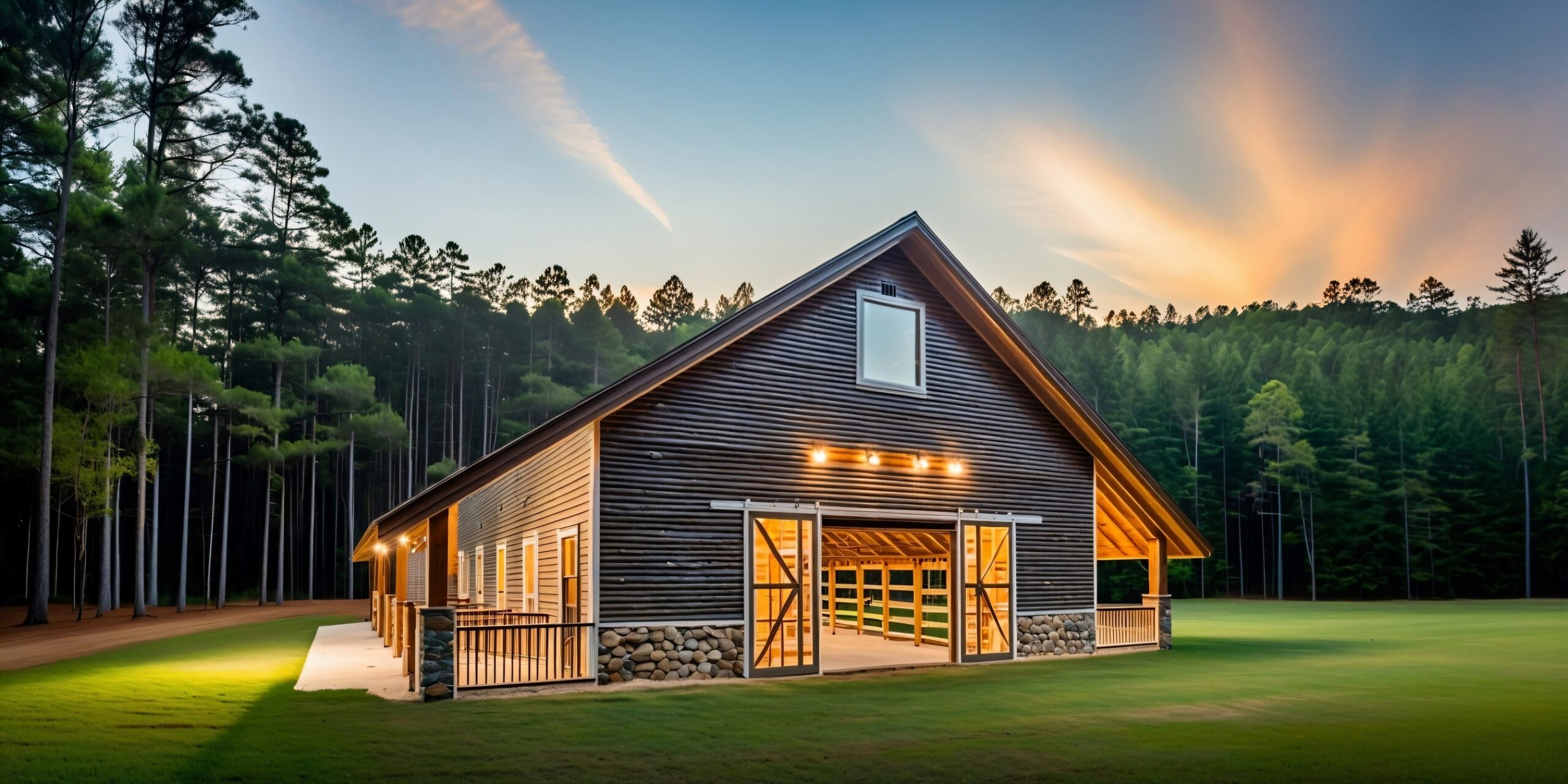
Reeves Young is proud to support the preservation and multi-phase redevelopment of Camp Harry E. Daniels, a 260+ acre campground dedicated to creating meaningful experiences for campers and the surrounding community.
This transformational project combines infrastructure investment with thoughtfully designed new construction to reimagine how individuals experience the outdoors. The scope includes selective demolition, comprehensive site development, construction of athletic fields, staff housing, storage facilities, nature trails, a marina, a limnology center, and supporting buildings that will serve the camp for decades to come.
Key facilities such as the Animal Demonstration Barn, Camper Cabins, and Dining Hall reflect a shared commitment to education, stewardship, durability, and community gathering. Each structure is designed to support safe, engaging, and resilient spaces that strengthen connection to nature and to one another.
As construction partner, Reeves Young is focused on delivering infrastructure that supports long-term sustainability while honoring the legacy of Camp Daniels. Through collaboration with MOA Architecture and project stakeholders, this redevelopment ensures that the camp continues to shape lives for generations.
For Mckenna Rodgers, finding her place in construction has been shaped by experience, relationships, and a strong understanding of the work.
At 5’1″, Rodgers is often the smallest person on the jobsite. It’s something people notice right away, but it has never defined her ability to lead. “I’ve even been jokingly called an ‘ankle biter,’” Rodgers says. “It’s always funny to see the initial surprise, but moments like that have taught me that presence isn’t about height.”
Mckenna and construction crew working on Hyatt Centric project in Atlanta
From early on, she was immersed in the industry through her father’s residential general contracting business. Spending time on jobsites gave her a firsthand look at how projects come together, from field operations to project management.
“He owns his own company, and growing up I was always visiting his jobsites,” she says. “I had a front-row seat to both the field operations and the behind-the-scenes management.” Those early experiences built a foundation she still relies on today, giving her a practical understanding of schedules, budgets, coordination, and problem-solving.
As she transitioned into commercial construction, Rodgers quickly realized that technical knowledge was only part of the equation.
“Construction is truly a ‘people’ business,” she says. “It’s not just about drawings, schedules and budgets. It’s about relationships.”
Developing the ability to navigate different personalities, communicate clearly, and build trust became one of her biggest areas of growth, as well as a key factor in her effectiveness on the job.
“I was leading a coordination meeting and fielding questions from multiple trades, the design team, and ownership,” she recalls. “And I realized I wasn’t second-guessing myself anymore.” Moments like that reinforced her confidence in leading and supporting her team.
During Women in Construction Week, Rodgers’ experience reflects a broader industry reality where opportunities are growing, even as construction remains largely male-dominated. “Let it roll off your back,” Rodgers says. “You have to have thick skin.”
At the same time, she emphasizes that preparation is what creates confidence. “Knowledge is power. Do your research, know your scope, and understand the details,” she says. “When you’re prepared and confident in your knowledge, you can’t be pushed around.” For Rodgers, that mindset has shaped how she approaches her work and how she hopes to support others entering the field.
Looking ahead, one of the things she’s most excited about is the opportunity to mentor other women in construction. “Being able to share my experiences and help make it a little smoother for the next generation,” she says.
She understands the value of having strong teams and reliable support systems—something that continues to motivate her day to day. “The field teams I work with,” she says. “When you have a strong team that supports each other and can joke around a bit, it’s easier to push through tough days.” And when those projects come to life, the reward is clear.
“Seeing something that started as drawings on paper come to life is incredibly rewarding,” Rodgers says.
Women in Construction Month is not just about recognition; it’s about representation, growth, and women driving the industry forward.
For Mckenna, that place is defined not by stature, but by presence, preparation, the teams she builds, and the impact she continues to make.
We sat down with Reeves Young’s Director of Industrial Business Development, Brenttnie Smith, to talk about her career, what paved her way into construction, and what success looks like to her.
Can you tell me about your path into construction and what ultimately led you into business development?
My path into construction was not traditional at all. I came from a sports broadcasting background, which on the surface had nothing to do with construction. Early in my career, I was focused on storytelling, relationship-building, live production, and communicating clearly under pressure.
When I moved to Atlanta in 2017, I was introduced to the AEC industry and, more specifically, to the role of business development. I quickly realized how transferable my skill set was. Sports broadcasting taught me how to connect with people quickly, ask thoughtful questions, listen actively, and communicate a message in a compelling way. It also required preparation, research, and the ability to think on my feet — all of which are critical in business development.
In construction business development, success is rooted in relationships, strategic communication, and understanding your audience. My background helped me become comfortable in front of clients, navigate high-pressure situations, and represent my company with confidence and clarity. What started as an unexpected career pivot ultimately became a natural fit, allowing me to blend relationship-building and storytelling with strategy and growth in the construction industry.
Business development requires both technical understanding and strong relationships. How have you learned to balance those two skill sets?
That balance has been intentional for me.
Coming into the industry from a non-technical background, I knew early on that if I wanted to be effective in business development, I would have to make a conscious effort to immerse myself in all aspects of construction — spending time with our operations teams, asking a lot of questions in preconstruction meetings, learning how projects are estimated and executed, and really understanding the nuances of industrial work.
At the same time, I’ve leaned into what I naturally bring to the table — building authentic relationships. Strong relationships open doors, but technical understanding builds credibility. I never want to be the person in the room who can connect well but can’t speak intelligently about what our team executes. So, I prepare by leaning in and listening to the expertise of my teammates.
Brenttnie Smith and the rest of the NAIOP Future Leaders class of 2026.
Was there a moment in your career when you realized you had found your stride as a leader?
I would say that moment has really happened over the past two years.
I naturally stepped into mentoring young professionals who were exploring or just starting their careers in business development. At first, it happened informally — answering questions, pulling them into meetings, helping them think through strategy or navigate client conversations. But over time, I realized they weren’t just asking for advice — they were looking to me for guidance.
Being able to serve as a resource, create opportunities for them, and help facilitate their growth has been incredibly meaningful. Watching them connect the dots, build relationships, and step into their own leadership has honestly been one of the most rewarding parts of my career.
That’s when I knew I had found my stride — not just in doing the work, but in helping shape the next generation of business development professionals.
As a woman in a highly relationship-driven and often male-dominated industry, have you ever had to approach situations differently to build credibility or trust?
If I’m being honest — yes. And I hate to say that, but it’s true.
I’ve been incredibly fortunate to earn a great deal of respect from my counterparts and many clients, and I’m truly grateful for that. But in a highly relationship-driven and often male-dominated industry, there have absolutely been moments where I’ve felt like I had to work twice as hard to prove my worth.
There are times I’ve felt the need to show up twice as much, be twice as prepared, be twice as quick with answers, and sometimes even twice as loud to ensure my voice is heard and my value is recognized. Not in a negative or resentful way — but in a very real, aware way.
What that experience has done, though, is sharpen me. It’s made me more prepared, more technically fluent, more confident in rooms where I may be the only woman at the table. Over time, credibility compounds. Consistency builds trust. And once that trust is established, it becomes less about proving yourself and more about delivering results.
What does strong leadership look like to you today?
To me, strong leadership today is about leaving your ego at the door.
It’s about putting the team above yourself — prioritizing collective success over personal recognition. A strong leader doesn’t need to be the loudest voice in the room or the one getting the credit. They focus on creating clarity, alignment, and opportunity for others to succeed.
It’s also about emotional discipline. Whatever is happening in your personal life — stress, frustration, challenges — you must have the maturity to leave that at the door when you step into the office. Your team deserves consistency. They deserve steadiness. Leadership means managing your emotions, so they don’t manage the room.
Strong leadership, to me, is steady, self-aware, and service-oriented. It’s about creating an environment where people feel supported, focused, and motivated.
What part of your role do you find most energizing or rewarding?
What I find most energizing and rewarding is watching our team win.
There is nothing better than seeing their faces light up when we land a deal that once felt out of reach — the ones we talked about strategically, chased intentionally, and maybe even thought were a long shot. Watching something that started as a vision turn into a signed contract is incredibly fulfilling.
It’s also rewarding to see us win awards or recognition that we weren’t even considered for before. That growth — from being overlooked to being a serious contender — represents the work, the grit, and the belief our team has built together.
For me, the real reward isn’t just the win itself. It’s the confidence that grows in the team because of it. It’s watching people realize what they’re capable of. That momentum, that shared pride — that’s what energizes me the most.
Brenttnie Smith and Chris Smith accepting the 2024 CMAA Project Achievement Award for Industrial New Construction Value More than $50 Million for the Falcon Parkway Industrial Park Campus on behalf of the Industrial team.
How has your perspective on success evolved over time?
Earlier in my career, I probably would have defined success by titles, recognition, or financial milestones. And while those things aren’t unimportant, my perspective has shifted significantly over time.
Today, success isn’t about money or titles anymore. Success is time.
It’s having built something strong enough — relationships, reputation, results — that I’m trusted. That I’m not forgotten or passed over because I choose to manage my time intentionally between work and home. It’s knowing I’ve done such a good job delivering value that I can step away for my family when needed without everything unraveling.
Success, to me, is being present. It’s getting to take time with my family without guilt, because I’ve put in the work and built a foundation that speaks for itself. That balance — and the freedom that comes with it — means far more to me now than any title ever could.
What advice would you give to young women who are interested in entering construction or business development but aren’t sure where they fit?
My biggest advice would be to reach out and find a mentor.
This industry can feel overwhelming from the outside, especially if you’re not sure where you fit. But there is so much opportunity within construction and business development — operations, strategy, marketing, estimating, client relations — that you don’t have to have it all figured out on day one.
Find someone who’s a few steps ahead of you and ask questions. Learn from their experiences — both their wins and their mistakes. Borrow their perspective. Let them help you navigate rooms, conversations, and career decisions with more confidence. A good mentor can shorten your learning curve dramatically and help you see potential in yourself that you might not recognize yet.
Brenttnie and a colleague taking a photo together at the NAIOP Georgia Night at the Fights event.
Outside of your title and responsibilities, what is something people may not know about you that has shaped who you are professionally?
Two things have shaped me professionally in ways people may not immediately see.
First, I have an amazing family at home and that includes my son, Oliver, who has completely changed my world for the better. Becoming a mother has given me a different lens on leadership, priorities, and perspective. It’s made me more efficient, more present, and more intentional with my time. Motherhood has strengthened me in ways I didn’t anticipate, and that absolutely shows up in how I lead and how I build relationships.
Second, I lost my father in 2016 to brain cancer. That experience will never leave me — and in many ways, I don’t want it to. It reshaped how I view work, pressure, and what truly matters. It gave me a profound sense of empathy and a reminder that we’re all carrying something unseen. It also grounded me in the understanding that we’re not just working for titles or accolades — we’re working for something bigger, for our families, for stability, for impact.
Both motherhood and loss have refined my perspective. They’ve made me more compassionate, more driven, and more aware that success means very little if it isn’t anchored in purpose and people.
What’s a moment in your career that made you think, “I can’t believe I get to do this”?
The moments that stand out most are when I step back and realize where this career has taken me.
I get to travel to some incredible places around the country — cities and facilities I once only imagined visiting. Walking job sites, touring operations, sitting in boardrooms in places I used to just read about… there are moments where I genuinely pause and think, “I can’t believe this is part of my job.”
I also get to meet executives and CEOs of companies I previously only knew from industry articles or press releases. Sitting across the table from leaders of major organizations, having strategic conversations, and representing my team in those rooms is something I don’t take lightly. It’s both humbling and energizing.
What’s one lesson construction has taught you that applies far beyond work?
One lesson construction has taught me that applies far beyond work is that foundations matter — in everything.
In construction, if the foundation isn’t solid, nothing else works. You can have the most beautiful design, the best finishes, the strongest team — but if the groundwork isn’t right, cracks eventually show.
That principle applies to relationships, leadership, and life. The way you build trust, the way you communicate, the way you show up consistently — those are your foundations. You can’t shortcut them. You can’t rush them.
Construction has reinforced for me that what’s below the surface is often more important than what’s visible. Character, integrity, preparation, and resilience — those are the true foundations. And when those are strong, everything else has something solid to stand on.
Brenttnie Smith, Stephen McMillan, and Will Poland at the Reeves Young February 2026 Staff Meeting.
If you could go back and give your younger self one piece of advice at the start of your career, what would it be?
If I could go back and give my younger self one piece of advice, it would be this: never allow your own light to be dimmed.
You worked hard to get where you are. Don’t let anyone minimize that. Don’t shrink yourself to make others more comfortable. Don’t question whether you belong in certain rooms.
You are in the rooms you’re in because you earned the spot to be there.
There will be moments early in your career where you may feel intimidated, underestimated, or unsure. But confidence doesn’t mean arrogance — it means recognizing your preparation, your work ethic, and your value. Own that.
I would tell my younger self to stand tall, speak up, and trust that she’s exactly where she’s supposed to be — not by accident, but by hard work.
Brenttnie at the Reeves Young February 2026 Staff Meeting
For Marcela Restrepo, construction has always been about more than schedules and structures. It’s about people, communities, and the stories that unfold through every project.
Her journey into construction began on a high school trip to Princeton University, where she discovered her passion for urban planning and building. Today, Restrepo serves as a Senior Project Manager with Reeves Young’s Commercial Construction team in Nashville, leading complex projects while mentoring the next generation of construction professionals.
Marcela Restrepo, a Colombia native, came to the United States as a high school exchange student. During a field trip to Princeton University, she had the chance to explore urban planning and building through the simulation game SimCity. That moment sparked the beginning of the rest of her career. From that day forward, she knew she would become a civil engineer.
Like all careers, hers is not free of trials and tribulations. However, she has loved it all, even through its ups and downs. Restrepo says, “What keeps me here is that there is a tangible result, and as hard and demanding as it can be, every project is its own story in and of itself, and every one of those stories is another chapter in my life story.”
She explains, “All the challenges, long days, relationships and exciting moments make it all worthwhile, and it is a wonderful feeling to be part of a project from start to finish.”
When Restrepo started her career in New York City, she was the youngest person on the projects and the only woman. In “the place where ‘if you can make it here, you can make it anywhere,’” she knew no one would just hand it to her.
To make her mark on the city, she knew she had to be more prepared, more committed, and more involved than her peers. She says, “I always took the time to meet everyone on the projects and listen to all the stories and experiences that they wanted to share.” Those relationships became the foundation of her leadership style.
Over the years, Restrepo adopted being a mentor as a part of her career. Mentorship became something meaningful and important to her. “I have taken many young people under my wing, and they have moved up to become successful project managers,” she says. “I have watched their careers take off and most of them are life friends outside of work.”
Even today, Restrepo still receives calls from former mentees sharing updates about their careers and successes. Her mentorship style focuses on helping young professionals build confidence in the industry. Rather than leaving people to figure things out on their own, she walks them through processes step by step so they understand what matters most and why. She also emphasizes the importance of building strong personal relationships on the jobsite so team members feel comfortable asking questions.
“You are a leader when you keep your team informed, set expectations, and hold them accountable,” Restrepo explains. “And you do this with a positive attitude and the goal of empowering them to succeed.” She believes a great project manager must be detail-oriented, organized, fair, honest, and knowledgeable. But true leadership requires something more.
“A great leader is also approachable and personable,” she says. “They connect with their team and treat trade partners and colleagues with respect.”
Marcela taking a photo with Reeves Young coworkers at the Reeves Young Nashville Holiday Party
The defining moment in Restrepo’s career was when she looked around the project staff meeting of the Bronx Point and home of the Universal Hip Hop Museum project in New York City only to realize that she was the leader of the room. She was no longer the young woman learning the ropes; she was now the expert. “I realized I was the adult in the room,” she recalls. “I had the experience, the years in the industry, and the answers.” It was then that she realized that she, alone, had the capability and responsibility to take these young people and craft them into construction professionals.
Throughout her more than 20 years in construction, Restrepo has seen the industry evolve—especially in the growing presence of women in the field. In 2006, women made up just over 8% of the construction workforce (Zhao, 2025). In 2025, that number has risen to 11.3%, an increase of 3.3 percentage points (U.S. Bureau of Labor Statistics, 2025). Still, representation in leadership remains limited. As of 2025, women hold only 18% of leadership positions in the industry.
“There is still a long way to go,” Restrepo says. “But when I started my career, I was the only woman on the projects.”
By the time she left New York City, that had changed dramatically. “I was on a project where the only male in the Owner, Architect, Contractor meetings was the superintendent,” she says.
Much of Restrepo’s career has been dedicated to affordable housing projects, work she finds especially meaningful. “I always felt a profound sense of accomplishment giving back to the community,” she says.
Today, she continues that passion through involvement with Nashville’s Young Leaders Council program, which focuses on affordable housing initiatives. She hopes to one day serve on the organization’s board of directors.
Outside of work, Restrepo enjoys spending time outdoors, sharing laughs with friends and family, and going on date nights with her husband Peter, who she proudly describes as a phenomenal chef.









 \
\









 ]
]